IBJJF matches are decided by points, advantages, penalties, and finally referee decision. Points are awarded when an athlete stabilizes a scoring position for 3 seconds, as counted by the central referee (Article 3.1).
Point-Scoring Positions
| Position | Points | Article |
|---|---|---|
| Mount | 4 | 4.4 |
| Back Mount | 4 | 4.4 |
| Back Control | 4 | 4.5 |
| Guard Pass | 3 | 4.2 |
| Takedown | 2 | 4.1 |
| Sweep | 2 | 4.6 |
| Knee on Belly | 2 | 4.3 |
General Scoring Rules
3.1 — Points shall be awarded by the central referee of a match whenever an athlete stabilizes a position for 3 (three) seconds.
3.2 — Matches should unfold as a progression of positions of technical control that ultimately result in a submission hold. Therefore athletes who voluntarily relinquish a position, in order to again score points using the same position for which points have already been awarded, shall not be awarded points upon achieving the position again.
3.4 — Athletes shall be awarded cumulative points when they progress through a number of point-scoring positions, as long as the three-second positional control from the final point-scoring position is a continuation of the positional control from the point-scoring positions from earlier in the sequence.
Example: Guard pass followed by mount shall add up 7 points (3+4).
3.1.1 — When the proper defensive counter for a submission hold results in exiting the match area, the referee shall signal 2 (two) points be awarded to the athlete applying the submission hold.
Scoring Under Submission Attack (Article 3.3)
3.3 — Athletes who arrive at a point-scoring position while caught in a submission hold shall only be awarded points once they have freed themselves from the attack and stabilized the position for 3 (three) seconds.
- 3.3.1 — Should an athlete achieve point-scoring positions while caught in a submission hold but only escapes the hold once no longer in the point-scoring position, will not be awarded points or advantages for those positions.
- 3.3.2 — The 3-second stabilization count for one or several point-scoring positions will be interrupted, when the opponent lock in a submission hold during the count. When this happens, the athlete will be awarded an advantage for each of the point-scoring positions achieved, regardless of whether the opponent is no longer in the positions once the hold has been escaped from or regulation time has ended.
- 3.3.3 — An athlete who reaches one or more positions (cumulative points) but is being attacked with a submission hold by his/her opponent, shall only be awarded one advantage point if he/she does not escape the attack prior to the end of the match.
3.5 — When both athletes pull guard at the same time, the athlete who achieves top position first is awarded an advantage.
Note: If the athlete achieves the top position by going straight to side-mount, no points nor an advantage for the guard pass will be awarded.
Takedown (2 points)
Per Article 4.1, a takedown is scored when one of the athletes, starting with 2 feet on the ground, causes the opponent to land on their back, sideways, or seated, establishing top position for 3 seconds.
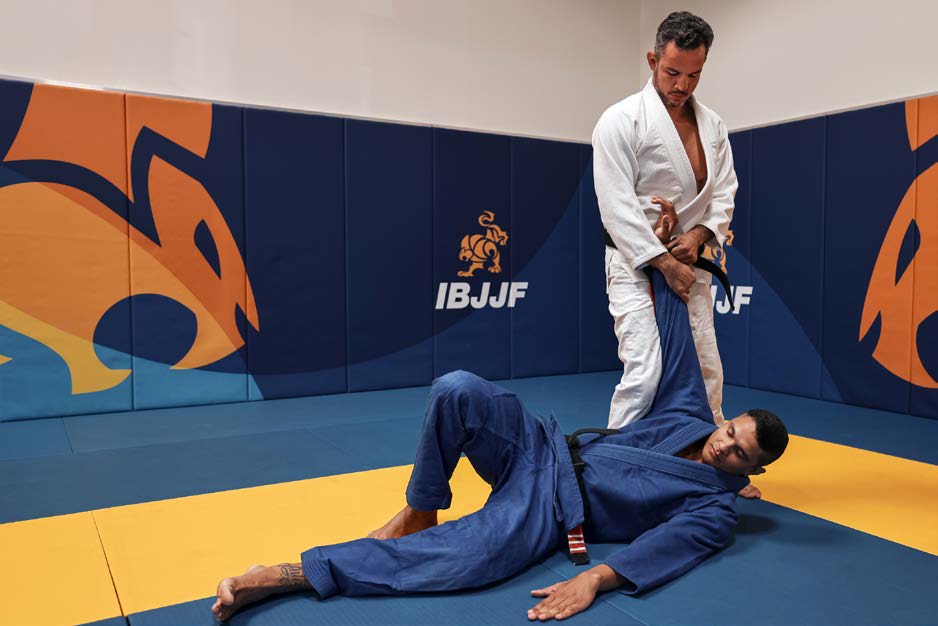
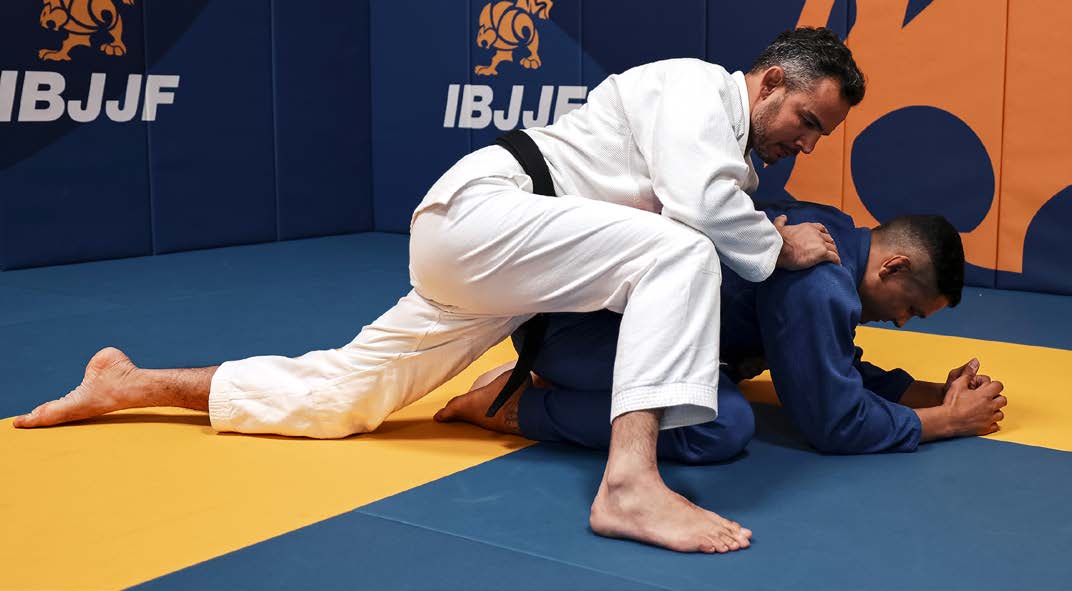
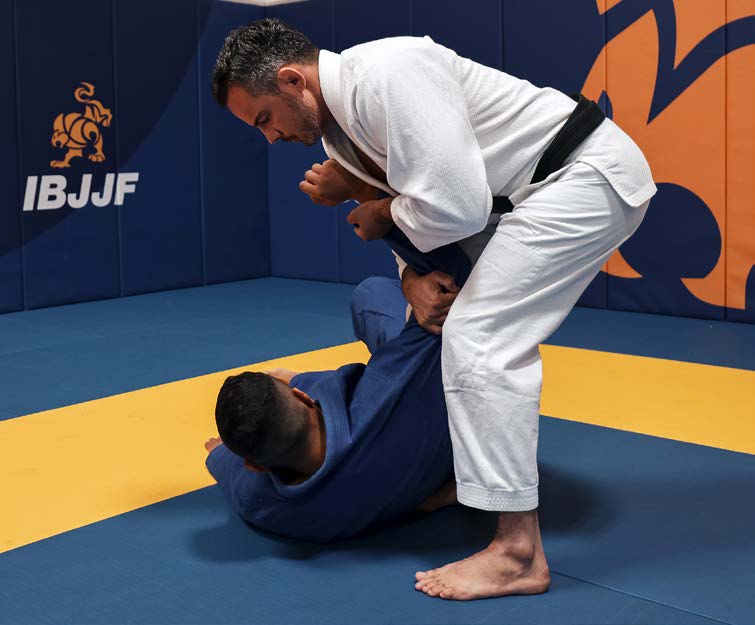
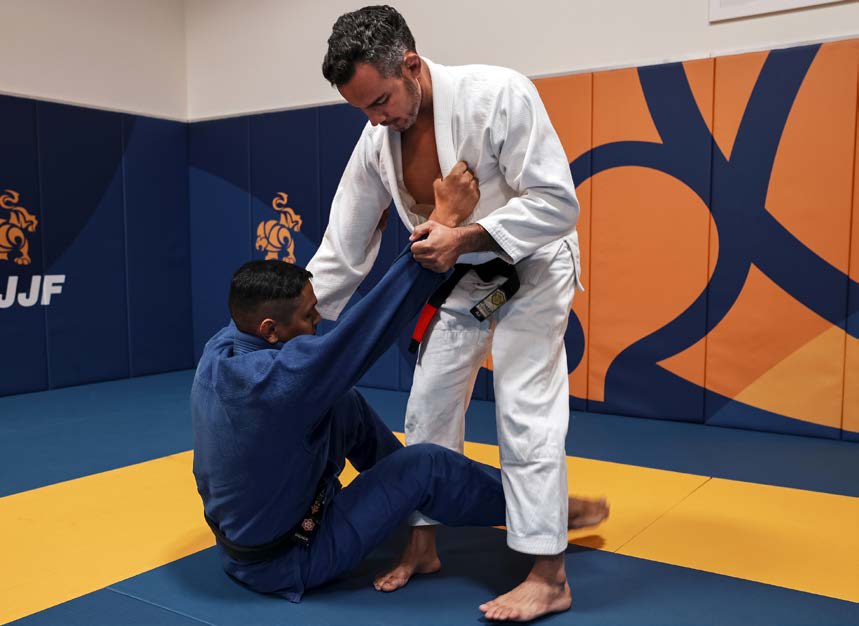
Conditions:
- Attacker must start with both feet on the ground
- Opponent must land on back, side, or seated position
- Attacker must establish and stabilize top position for 3 seconds
Key rules and exceptions:
- When an athlete forces the opponent to the ground on all fours or belly-down, points are awarded once the athlete performing the takedown controls the opponent’s back without requiring hooks, keeping at least one of the opponent’s knees on the ground for 3 seconds (4.1.2)
- If the takedown lands in guard or half-guard and the opponent immediately sweeps, the attacker gets an advantage and the opponent gets 2 points for the sweep (4.1.8)
- No points if the opponent is taken down from their knees or any ground-fighting situation (4.1.6 Note)
- No points or advantage for a takedown used to defend a standing back-take where the opponent has (a) both hooks in place, or (b) one hook in place and neither foot on the ground. Even after the position has been stabilized for 3 seconds (4.1.9)
- If an athlete forces his or her opponent to the ground in the outlying safety area, the athlete performing the takedown should have both feet within the match area when the movement begins. If the athletes land in a stabilized position, the referee will only stop the match after 3 seconds of stabilization, then score the points and restart at the center (4.1.3)
- While in any position starting from guard, where the athletes remain on their feet for 3 seconds, the combat shall then be considered standing combat. Note: In order to start the 3-second countdown, one of the athletes must have two feet on the ground and the opponent at least one foot on the ground without the knee of the opposite leg touching the mat (4.1.5)
- A guard-pull attempt by the opponent does not negate takedown points if the takedown was initiated first (4.1.10)
- An athlete who initiates a takedown after the opponent initiates a guard-pull attempt shall not be awarded the two points or advantage for the takedown (4.1.11)
- When an athlete has a grip on the opponent’s pants and the opponent pulls guard, the athlete with the grip on the pants shall be awarded two points for the takedown if he/she stabilizes the top position on the ground for 3 seconds. Note: If the opponent pulls closed guard and remains suspended in the air, the athlete will have to put the opponent’s back on the ground within 3 seconds and stabilize the top position for 3 seconds to be awarded takedown points (4.1.12)
- A counter-takedown following a single or double-leg attempt scores only for the counter-takedown athlete (4.1.7)
- In a sweep movement where both athletes remain standing for less than 3 seconds and the defensive athlete throws the opponent to the ground, no takedown or sweep points/advantages are awarded (4.1.4)
Guard Pass (3 points)
Per Article 4.2, a guard pass is scored when the athlete in top position manages to surmount the legs of the opponent in bottom position (pass guard or half-guard) and maintain side-control or north-south position over the opponent for 3 seconds.
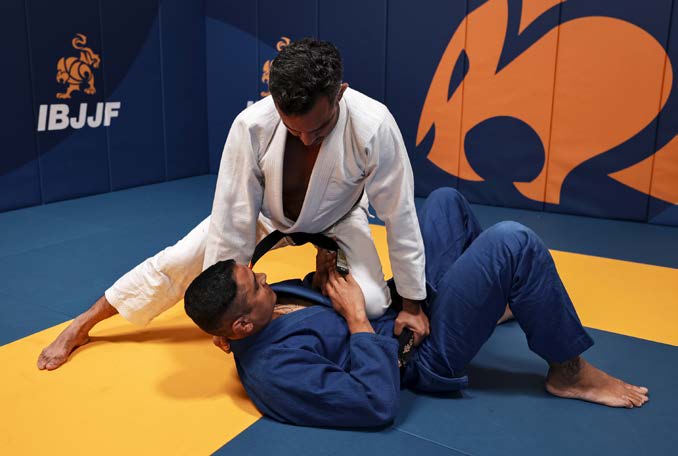
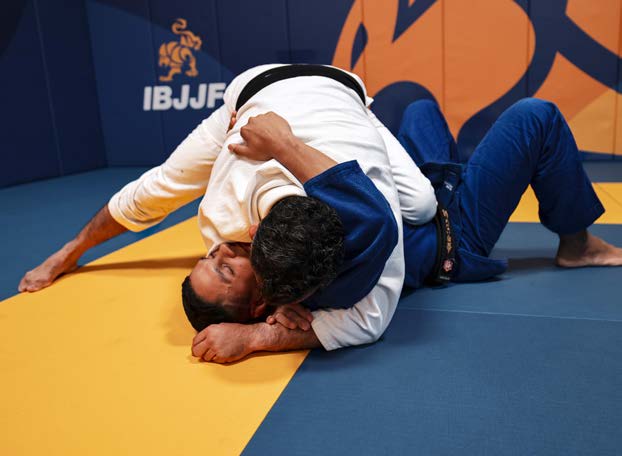
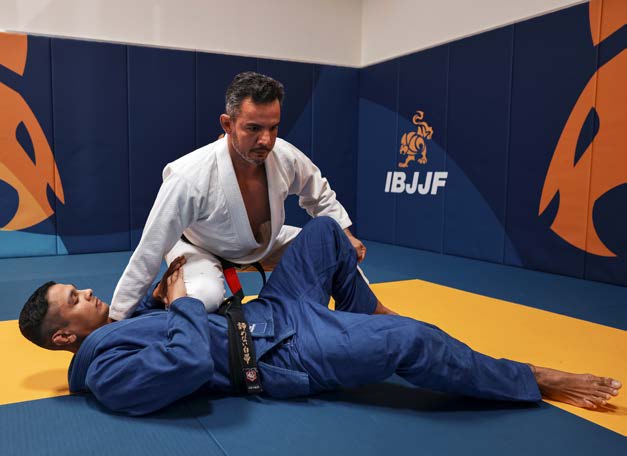
Conditions:
- Athlete must be in top position
- Must pass beyond the opponent’s legs (guard or half-guard)
- Must maintain side-control or north-south for 3 seconds
Note 1: Guard is defined by the use of one or more legs to block the opponent from reaching side-control or north-south position over the athlete on bottom.
Note 2: Half-guard is the guard where the athlete on bottom is lying on his/her back or side and has one of the top-positioned athlete’s legs trapped, blocking him/her from achieving side- or north-south control over the bottom-positioned athlete for 3 seconds.
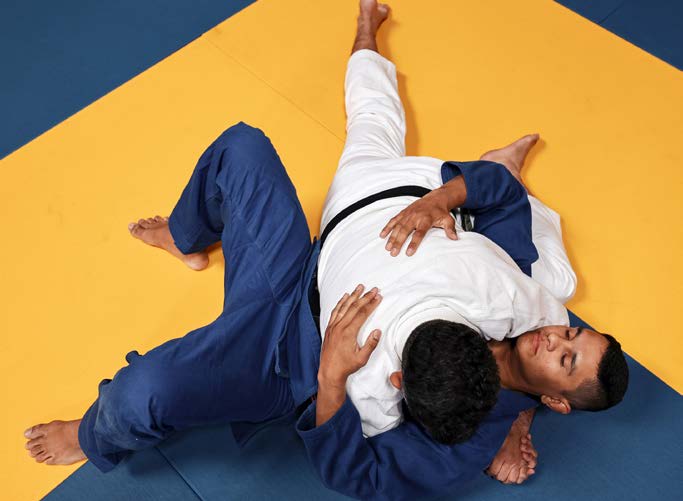
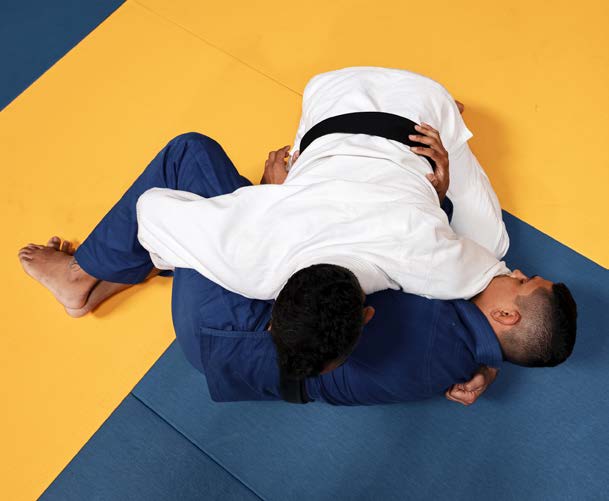
No points awarded for guard pass in these situations:
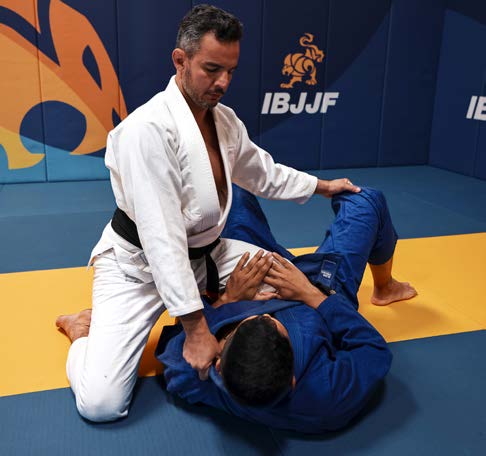
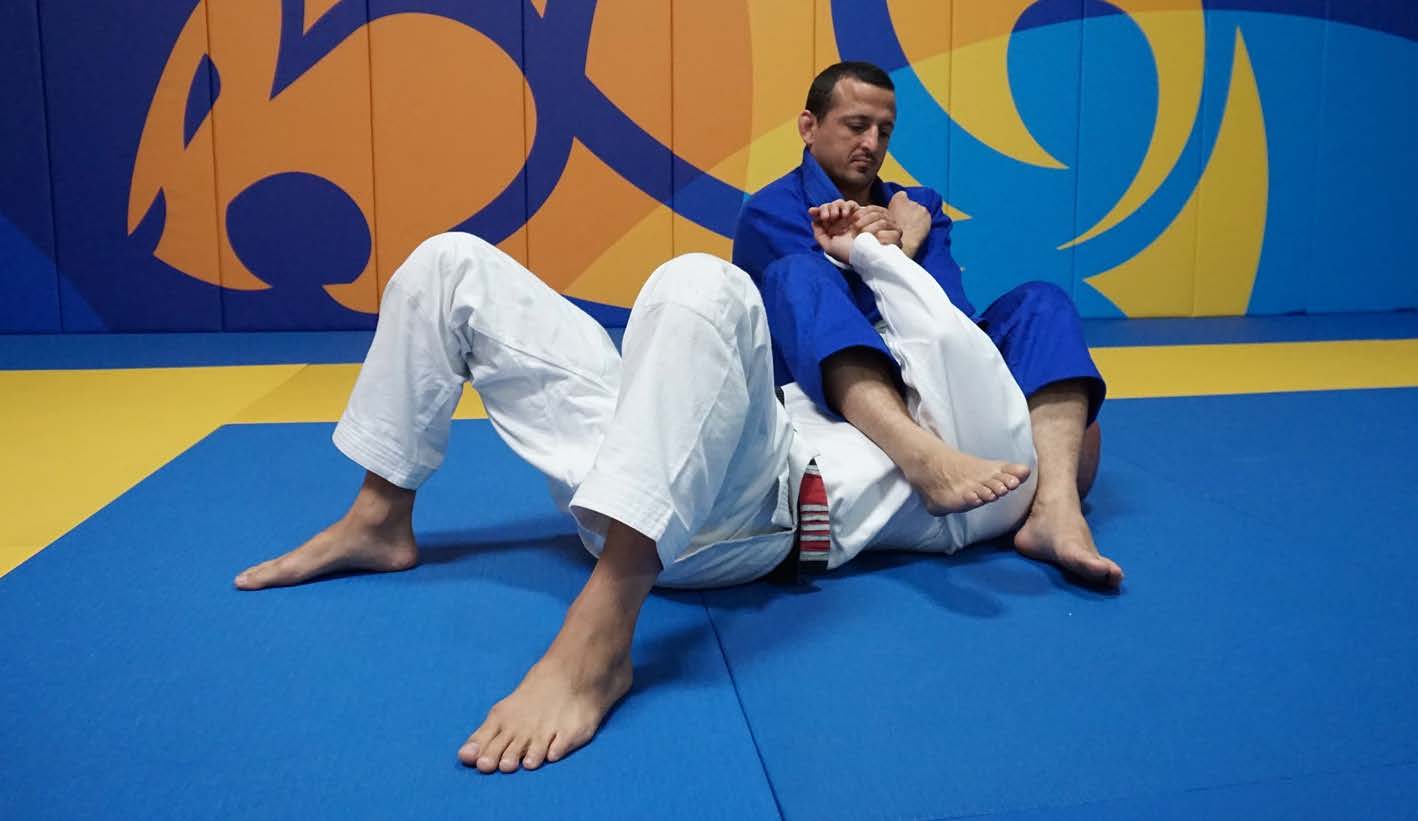
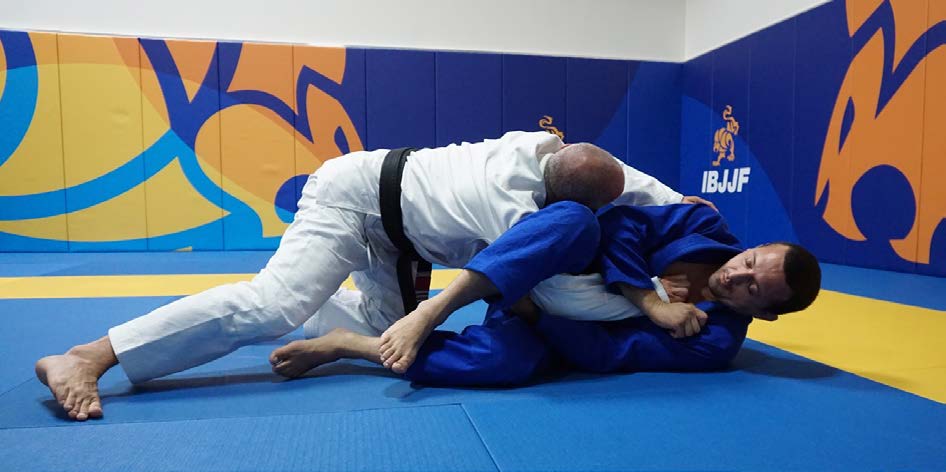
Exception: If while attacking from top position (such as an armbar), the athlete ends up on bottom and does not use their legs to prevent the opponent from reaching side-control, no points or advantages shall be awarded for the guard pass.
Knee on Belly (2 points)
Per Article 4.3, knee on belly is scored when the athlete on top and free of the opponent’s guard places the knee or shin (closest to the opponent’s hip) on the opponent’s belly, chest, or ribs, without the opposite knee touching the ground, maintaining the position stable for 3 seconds while the opponent is lying on their back or side.
Points Awarded:
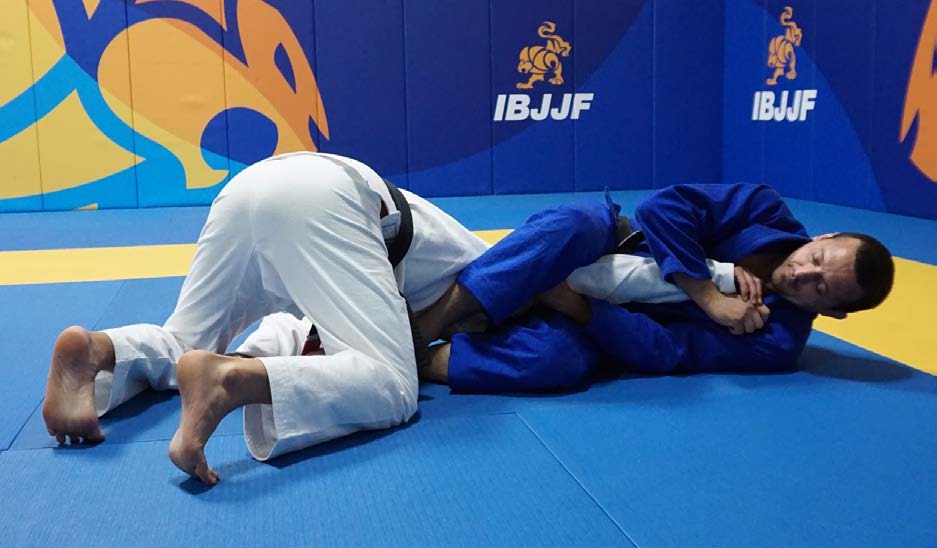
Conditions:
- Athlete must be on top and free of the opponent’s guard
- Place knee or shin on belly, chest, or ribs
- Opposite knee must not touch the ground
- Opponent must be lying on back or side
- Maintain position for 3 seconds
Advantage:
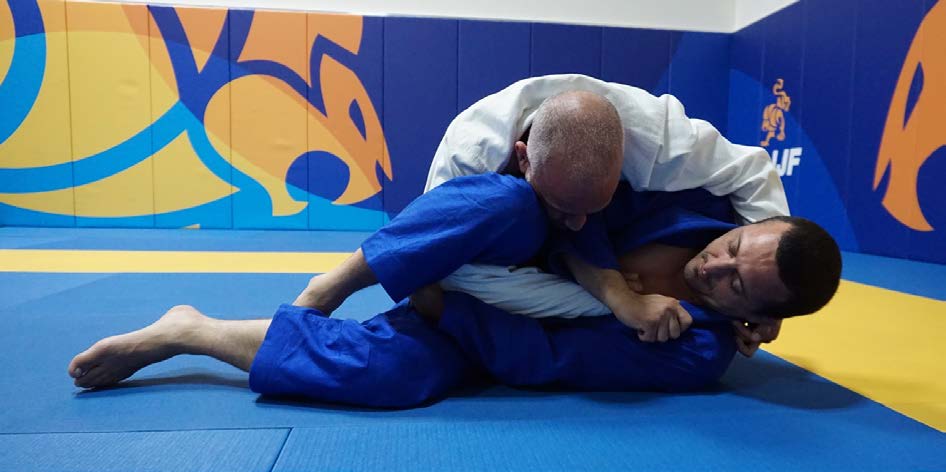
Exception: When an athlete places a knee on his/her opponent’s belly but only places the knee and not foot of his/her other leg on the ground, this earns an advantage, not points.
No Points Awarded:
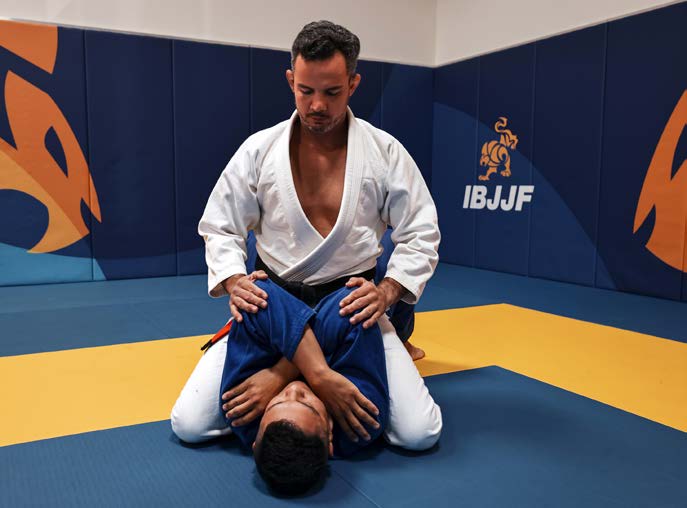
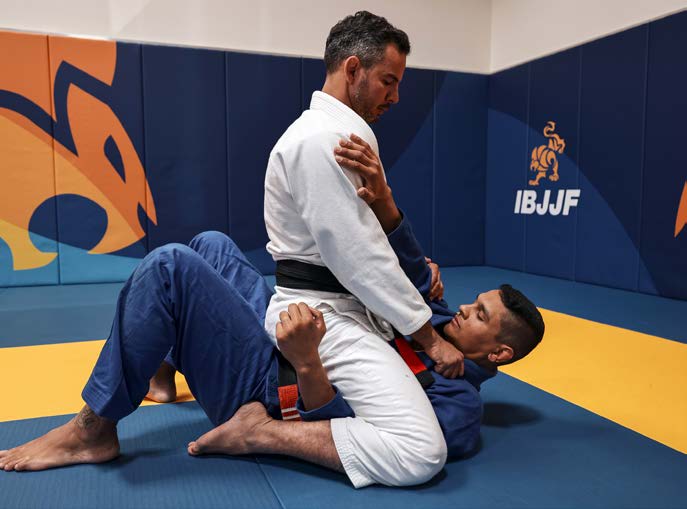
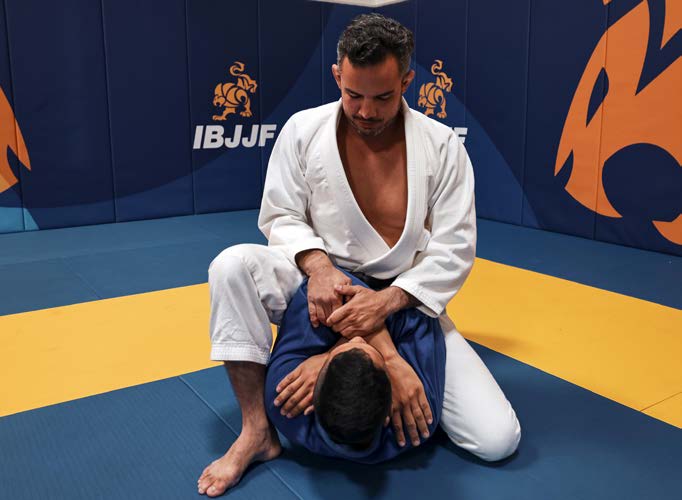
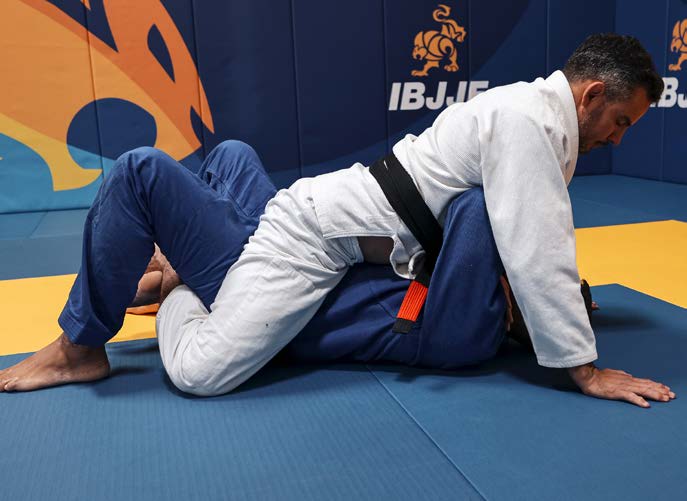
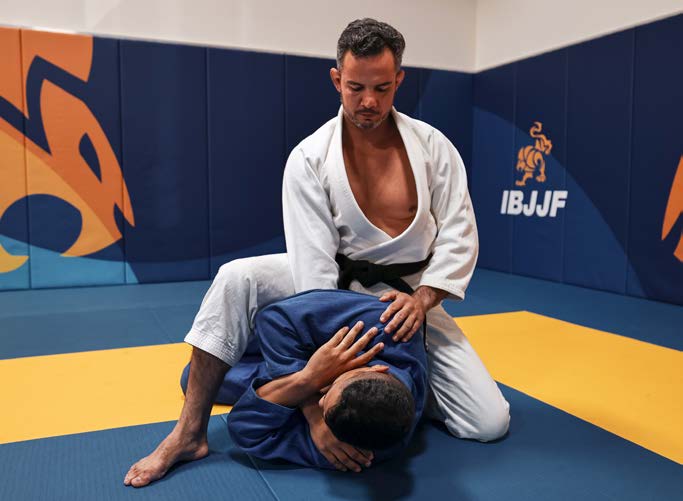
Mount and Back Mount (4 points)
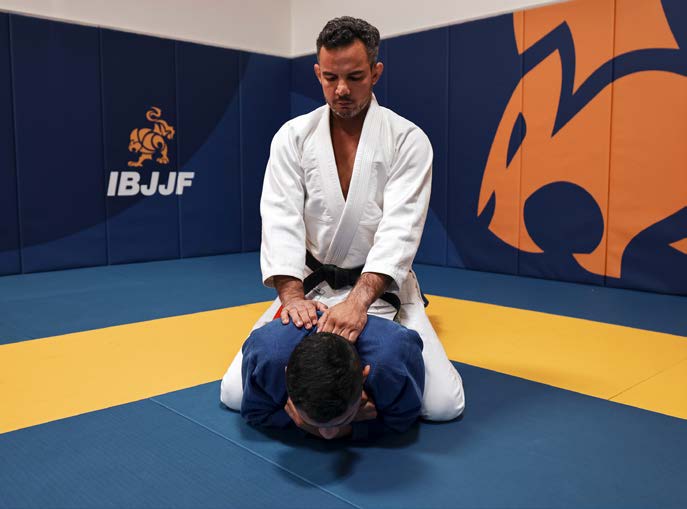
Per Article 4.4, mount is scored when the athlete is on top, clear of half-guard, sitting on the opponent’s torso with two knees or one foot and one knee on the ground, facing the opponent’s head, and with up to one arm trapped under the leg — maintained for 3 seconds.
Points Awarded:
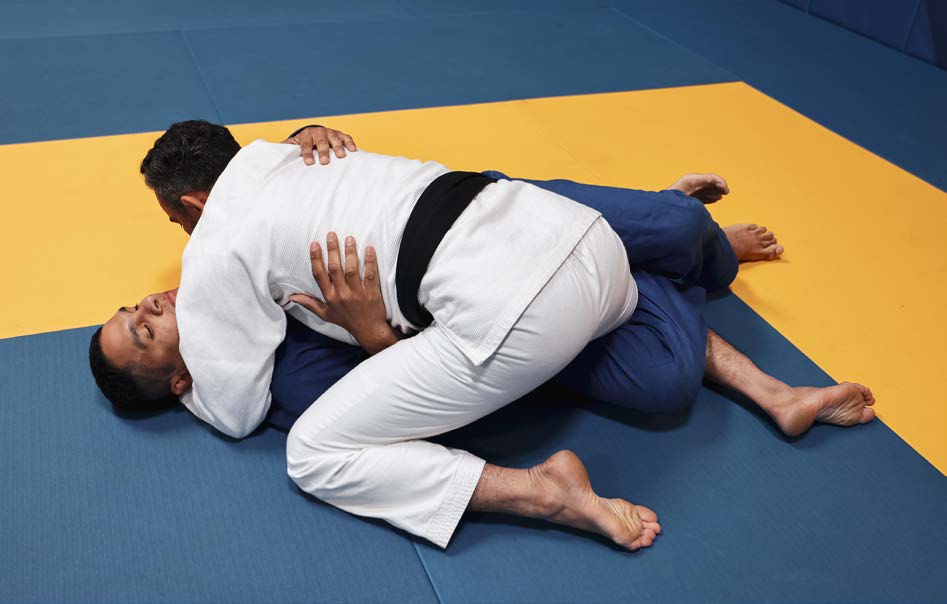
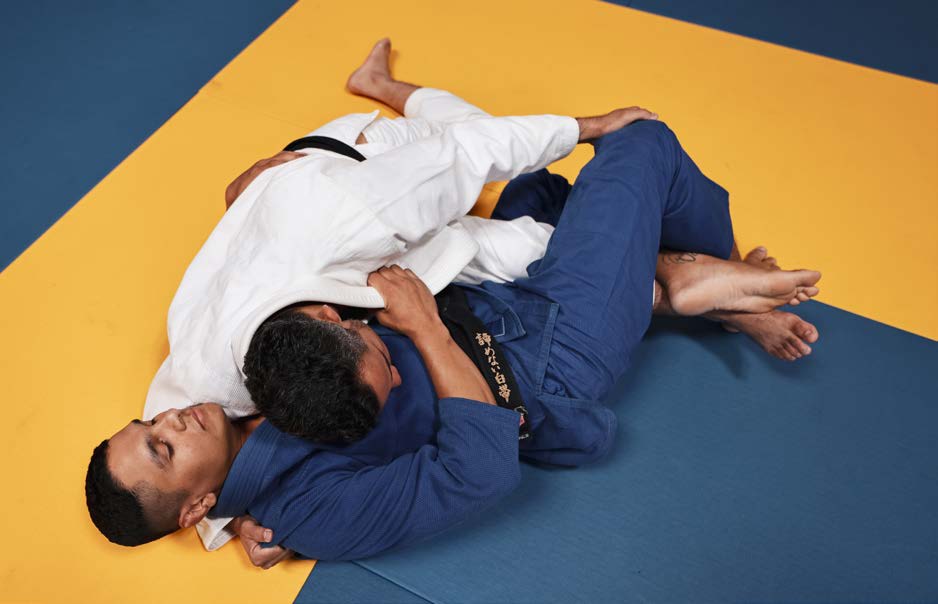
Conditions:
- Athlete must be on top, clear of half-guard
- Sitting on opponent’s torso
- Two knees, or one foot and one knee on the ground
- Facing the opponent’s head
- Up to one arm may be trapped under the attacker’s leg
Advantage:
No Points Awarded:
Exceptions:
- If the leg trapping an arm extends beyond the opponent’s shoulder, mount points are not awarded
- Landing on top with a triangle fastened around the opponent does not score mount points
- Backwards mount (facing opponent’s feet) does not score
- Mount over both arms scores only an advantage
- Transition from back mount to mount or vice-versa scores 4 points for each, as they are distinct positions (each requiring 3-second stabilization)
Back Control (4 points)
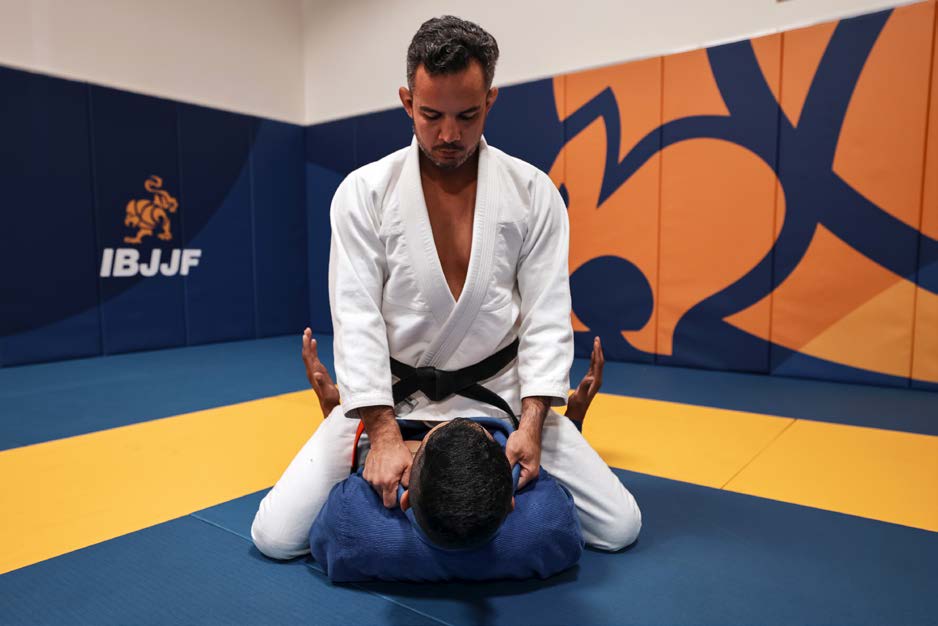
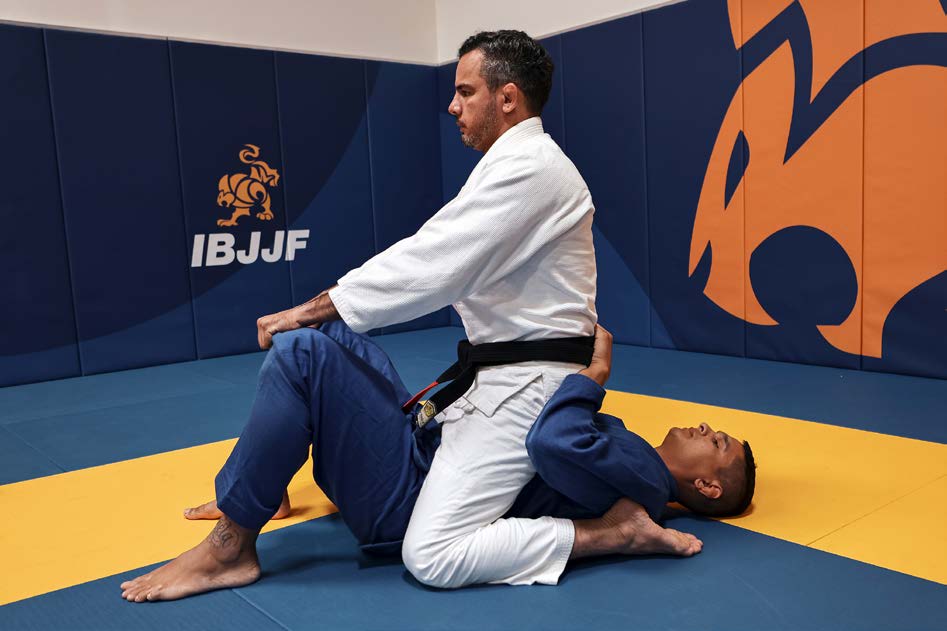
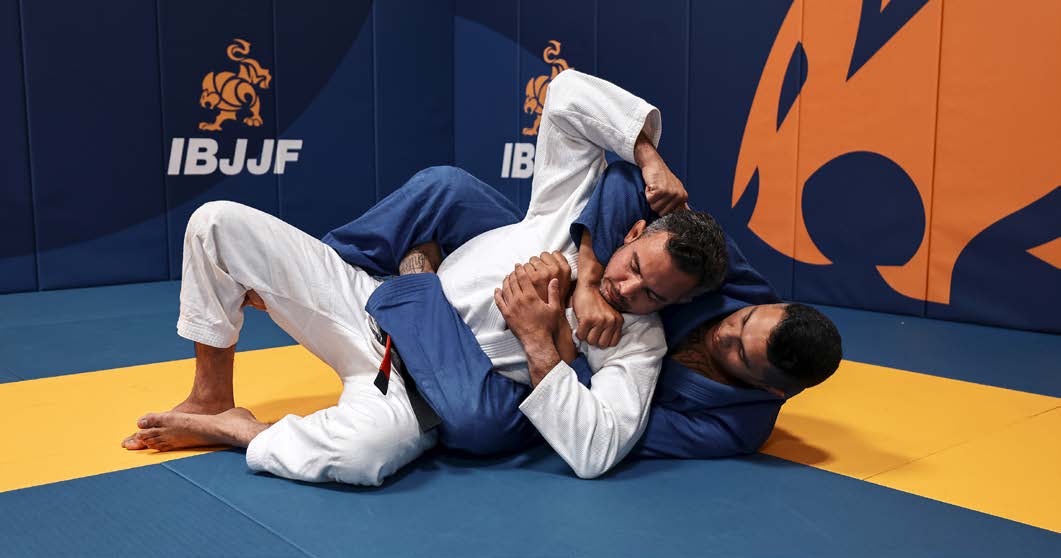
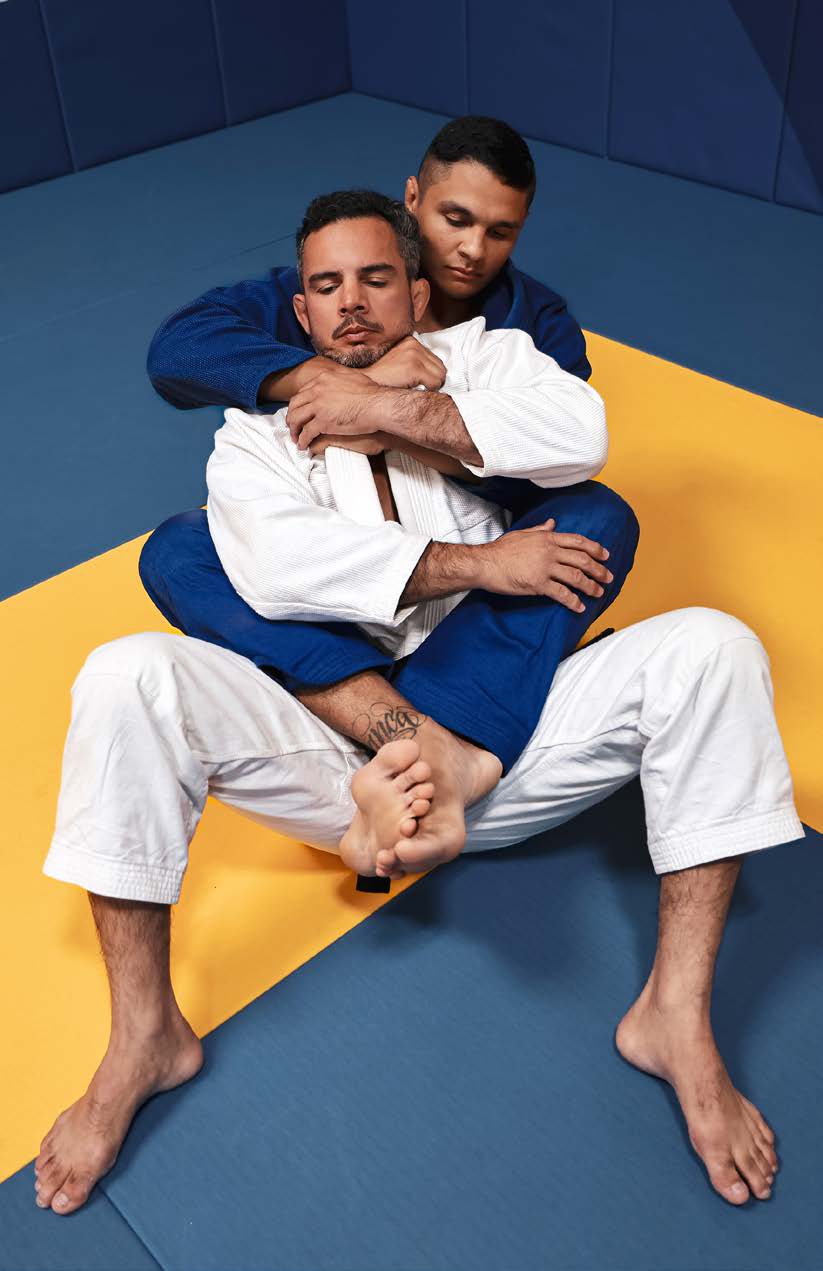
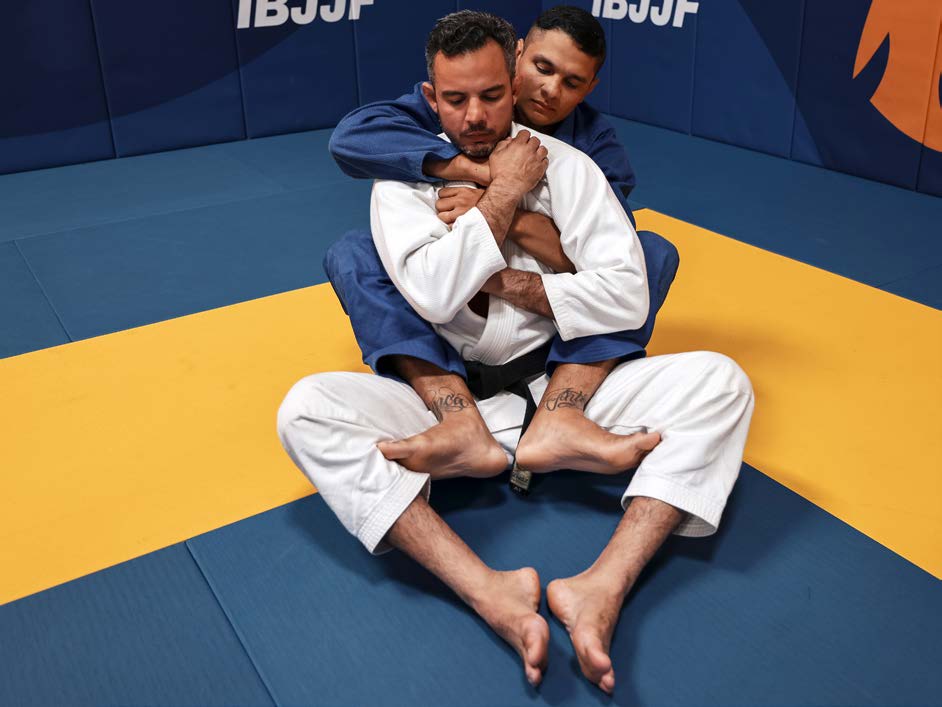
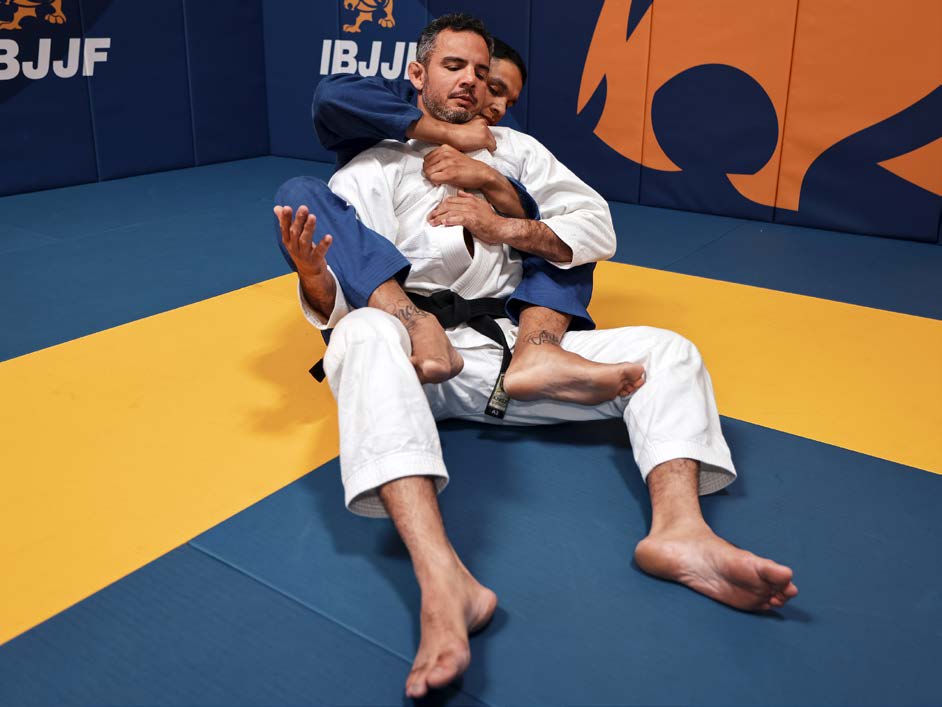
Per Article 4.5, back control is scored when the athlete takes control of the opponent’s back, placing both heels between the opponent’s thighs without crossing the legs, in a position to trap up to one of the opponent’s arms without trapping the arm above the shoulder line — maintained for 3 seconds.
Points Awarded:
Conditions:
- Both heels placed between the opponent’s thighs (hooks in)
- Legs must not be crossed
- Must be in a position to trap up to one of the opponent’s arms
- Must not trap the arm above the shoulder line
- Maintain for 3 seconds
Advantage only:
Exceptions (advantage only):
- Hooks in but trapping both arms
- Legs in a figure-four triangle (body triangle) without hooks
- Feet crossed between the thighs
Sweep (2 points)
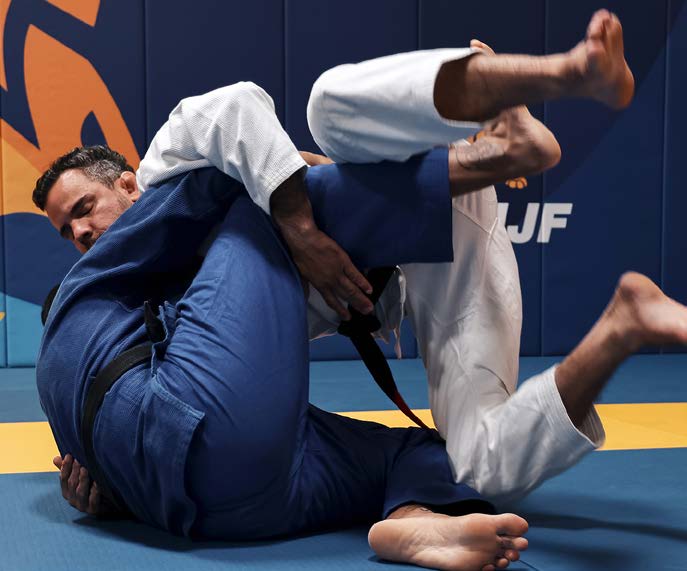
Per Article 4.6, a sweep is scored when the athlete on bottom with the opponent in their guard or half-guard inverts the position, forcing the opponent who was on top to be on bottom, and maintains for 3 seconds.
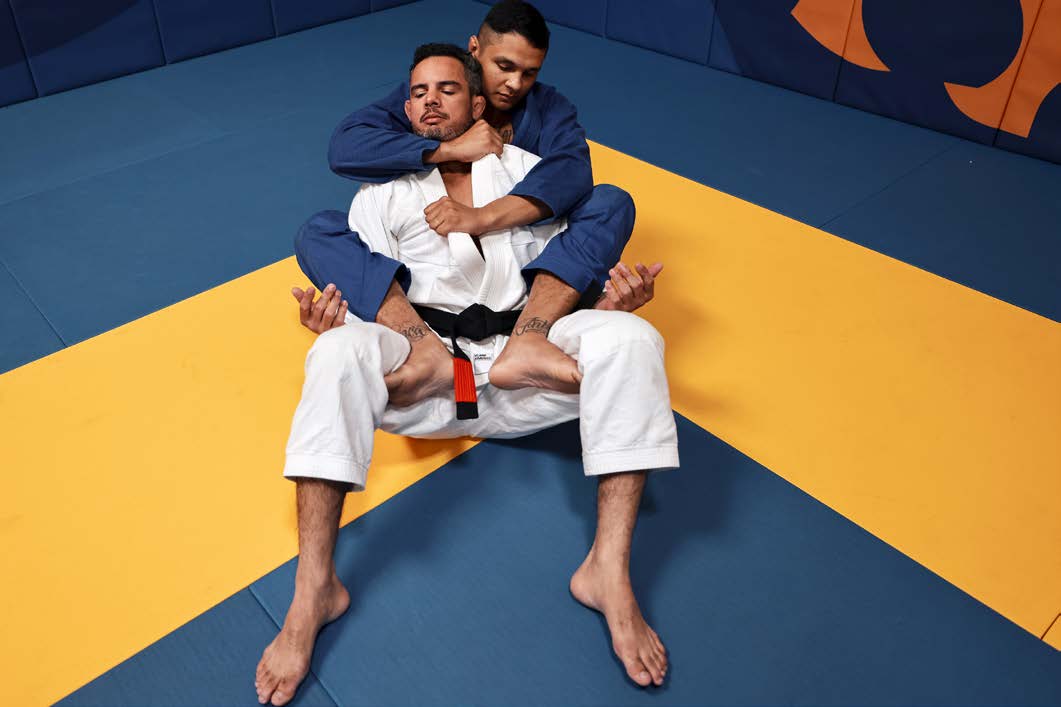
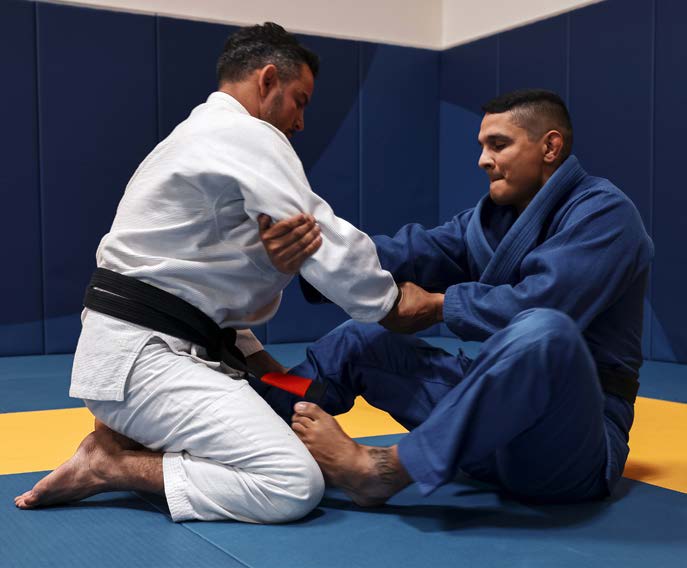
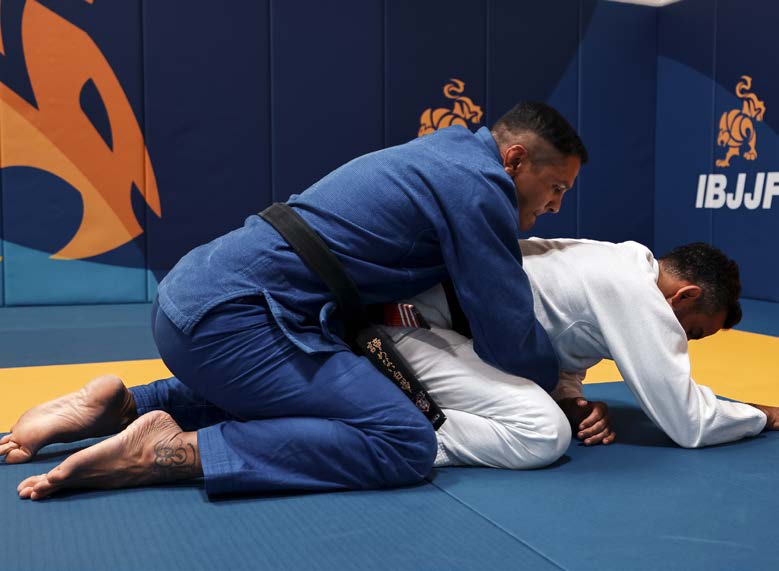
Conditions:
- Athlete must start on bottom in guard or half-guard
- Invert the position so the opponent goes from top to bottom
- Maintain top position for 3 seconds
Sweep from back turn variant:
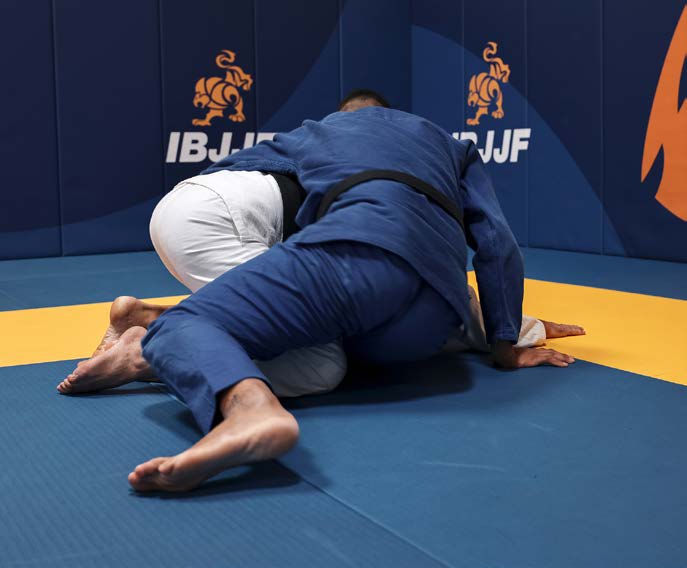
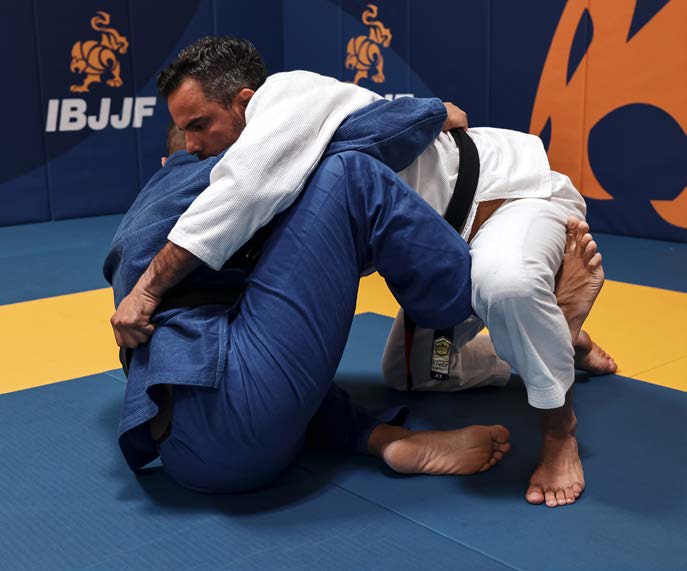
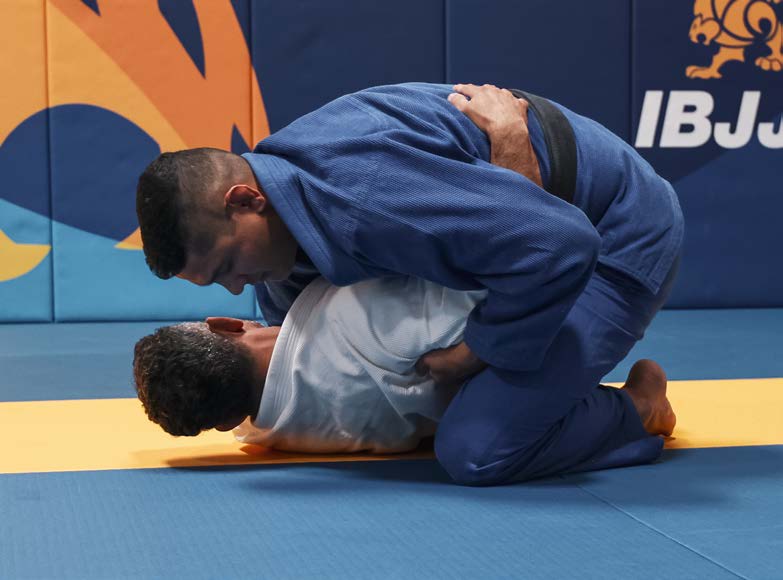
Stand-up sweep variant:
Additional ways to score sweep points:
- When the bottom athlete inverts and the opponent turns to all fours, and the sweeping athlete controls the back without hooks but keeping at least one of the opponent’s knees on the ground for 3 seconds (4.6.2)
- When the bottom athlete gets to their feet, puts the opponent down, and maintains grips in top position for 3 seconds (4.6.3)
Advantages (Article 5)
An advantage is counted when an athlete achieves a point-scoring pass position requiring 3 seconds of control but is unable to maintain control for the entire duration (Article 5.1). An advantage is also characterized by near-completion of a point-scoring position where the referee assesses the opponent was in real danger and if the athlete clearly came close to reaching the point-scoring pass position (Article 5.2).
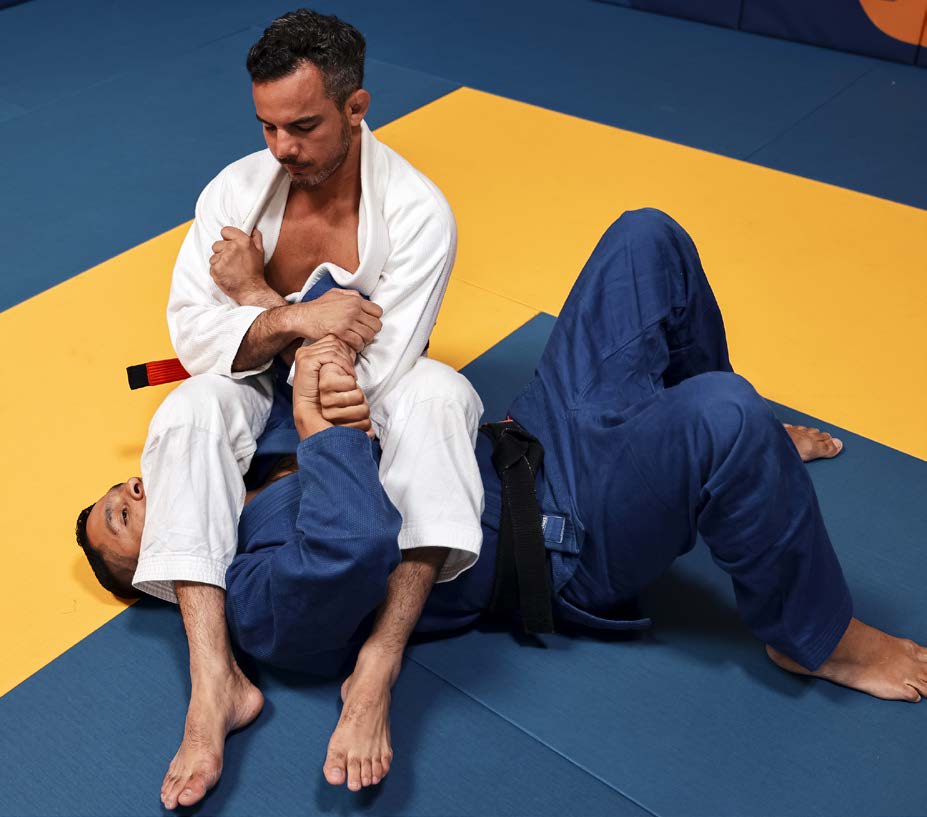
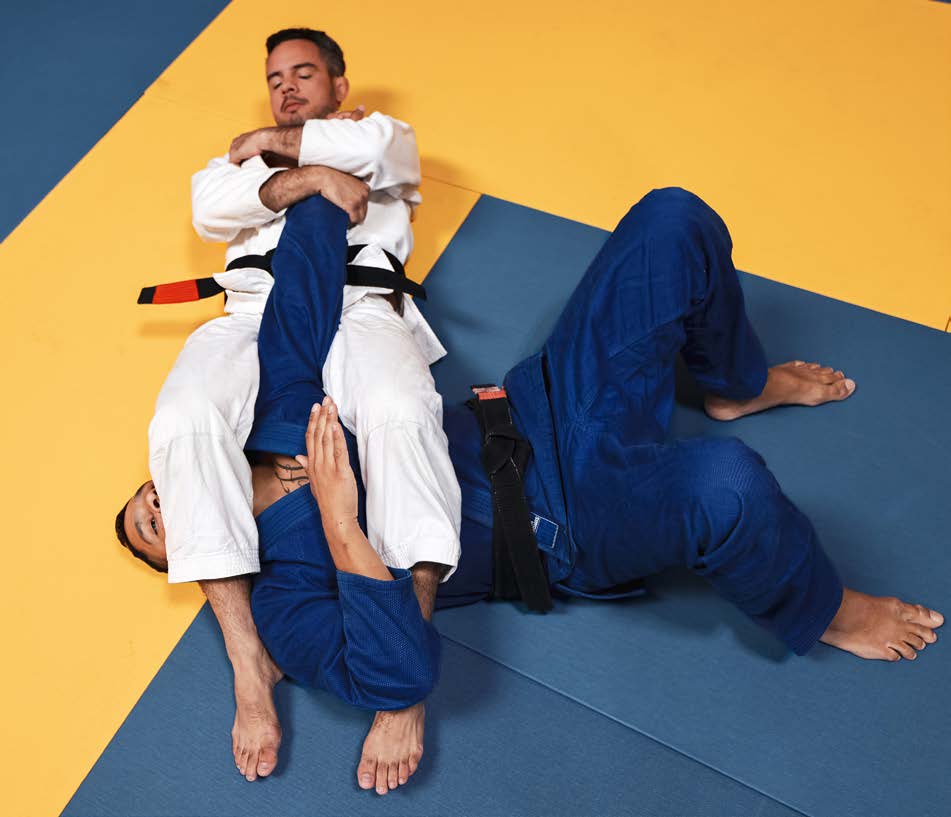
5.3 — The athlete shall be awarded an advantage-point when he/she attempts a submission hold where the opponent is in real danger of submitting. Again, it is the referee’s duty to assess how close the submission hold came to fruition.
5.4 — An advantage point may be awarded by the referee even after a match has run its course but before announcing the result.
5.5 — The referee may only award an advantage point once there is no longer a chance of the athlete reaching a point-scoring position.
Examples of Advantages (Article 5.6)
- From takedown (5.6.1): When an athlete achieves a takedown and the opponent lands back-down, sideways, or sitting but the attacker cannot stabilize for 3 seconds
- From guard pass (5.6.2): When the athlete stacks the opponent or controls the opponent’s back in four-point-kneeling position; or achieves half-guard control from a pass sequence but does not solidify the pass
- From knee on belly (5.6.3): When an athlete places a knee on his/her opponent’s belly but only places the knee and not foot of his/her other leg on the ground
- From mount (5.6.4): When the athlete on top tries to sit on the opponent’s torso but both of the opponent’s arms are trapped under the legs
- From back control (5.6.5): When an athlete mounts the opponent’s back but traps both arms; or crosses legs, fastens a figure-four, or only places one heel between the thighs
- From sweep (5.6.6): When the athlete unbalances the opponent through a sweep attempt and reaches top position but is unable to stabilize for 3 seconds
When Advantages Are NOT Awarded (Article 5.7)
- 5.7.1 — Half-guard position shall not count as an advantage for the athlete on top if they complete the guard pass sequence
- 5.7.2 — Half-guard position shall not count as an advantage if it did not originate from a guard-pass attempt
- 5.7.3 — Athletes who suffer a takedown but manage to roll to top position shall no longer be awarded an advantage by the referee
- 5.7.4 — The athlete who initiates a sweep movement but deliberately gives up top position to preserve a defensive position shall not be awarded an advantage for the sweep
- 5.7.5 — No advantages will be awarded for sweeps that start and end in a 50/50 guard situation
- 5.7.6 — No advantage when an athlete attempting a single-leg takedown traps the opponent’s leg and drags the opponent outside the combat area
- 5.7.7 — No advantage when an athlete attempting a sweep movement leads the opponent to fall outside the match area without ever landing on top during the movement
How Matches Are Decided (Article 2)
Matches can end by the following outcomes, in order of priority:
- Submission — Opponent taps twice with hand on the opponent, ground, or themselves, in a clear and apparent manner; taps the ground with a foot when arms are trapped; verbally withdraws; or screams/emits noise expressing pain while in a submission hold (Article 2.1)
- Stoppage — Referee or doctor stops the match due to injury, cramps, bleeding that cannot be contained, or loss of bodily functions (Article 2.2)
- Disqualification — Athlete commits a foul addressed in Article 6, and the referee applies penalties per Article 7 (Article 2.3)
- Loss of Consciousness — Athlete loses consciousness from a legal hold or an accident not stemming from an illegal maneuver (Article 2.4)
- Points — Athlete with the most points at the end of regulation time wins (Article 2.5.1)
- Advantages — If points are tied, the athlete with the most advantage points wins (Article 2.5.3)
- Penalties — If points and advantages are tied, the athlete with the least penalty points wins (Article 2.5.4)
- Referee Decision — If all scores are equal, the referee determines the winner based on who displayed greater offense and came closest to achieving possible point- or submission-scoring positions (Article 2.6)
- Random Pick — Only in finals where both athletes suffer accidental injury with a tied score and neither can continue (Article 2.7)
Source: IBJJF Rules Book, June 2024 edition, Articles 2-5.